Still Here
 165 cm x 120 cm Pastel over photographic print on canvas, copyright Shared Habitat
Still Here is an image of an empty bed and a source of light, creating a luminous space that appears inhabited although no one is there.
The bed may suggest rest, waiting, birth, love, intimacy, illness or death, or simply a place momentarily left.
The image hovers between presence and absence, and asks what it might mean not to know, but simply to be with what is.
Nequid Pereat: Harvest

Responding to the theme of Time...
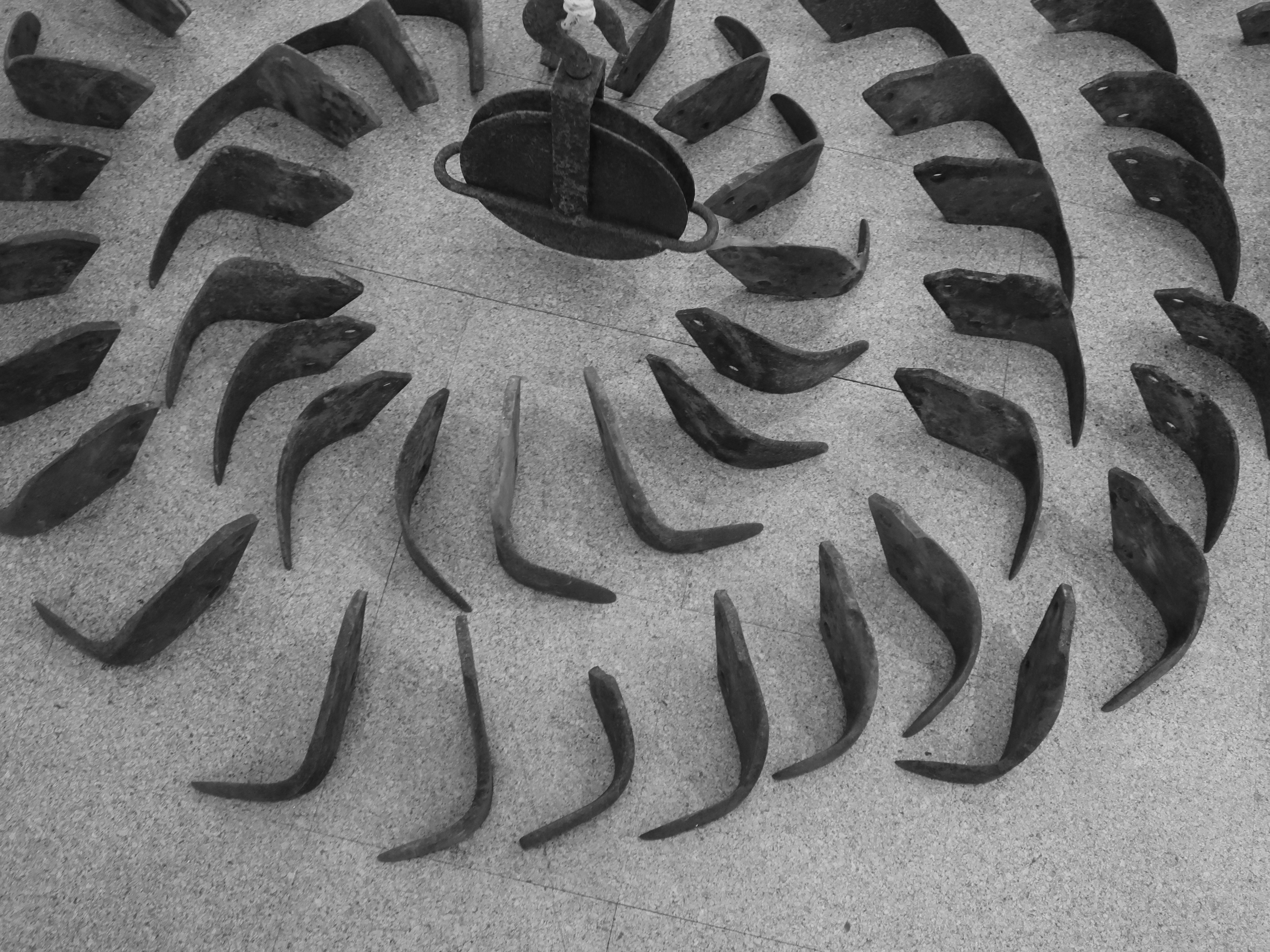
Nequid Pereat (“Let Nothing Be Lost”), the inscription on the exterior clock of Wells Cathedral, forms the title for Eila Goldhahn’s site-responsive installation located within the cathedral precinct. It engages with the historical fabric of the cathedral through a distinct material language, reflecting on agricultural, architectural and human time.
Located within Palm Churchyard, an ancient burial ground enclosed by the cathedral cloisters, Nequid Pereat: Harvest consists of approximately 200 reclaimed iron ploughshares each weighing up to 1.5 kg arranged intiuitively in a spiral on the autumnal cut lawn. Drawing upon the agricultural histories of the surrounding landscape and the slow temporal rhythms embedded within the cathedral precinct, the work gathers together tools shaped by labour and repetition.
Initially appearing as wing-like forms, the tools gradually reveal themselves as implements of cultivation. Resting lightly upon consecrated ground, the spiral evokes processes of transformation and return, proposing a still gathering in which nothing is discarded and nothing is entirely lost.
Enclosed by the cloister walkways and visible from the glazed doorway even in poor weather, the site allows the work to be encountered both directly and from a distance. The spiral of individual iron ploughshares sits naturally on the grass, where these abandoned agricultural tools return to the ground from which they originally derived their purpose and .
Positioned partly beneath the canopy of the ancient yew tree and carefully distanced from the surrounding graves, the installation enters into a quiet dialogue with cultivation, mortality and renewal.
The yew, traditionally associated with endurance, remembrance and regeneration, reinforces these themes. The spiral form suggests growth rings, crop circles, pilgrimage routes and cyclical time itself.
The work’s low profile encourages slow contemplation and rewards changing viewpoints as visitors move through the cloisters and churchyard. The installation therefore becomes both a meditation on agricultural labour and a reflection on the interdependence of landscape, human endeavour and sacred time.




Putting
Our
House in Order
Artists:
Eila Goldhahn (lead): Installation and Film footage
Mike McInerney: Japanese Flute
Eeva-Maria Mutka: Dance Performance
Stuart J Young: Photography and Music
Project type: Installation / Exhibition
Eila Goldhahn (lead): Installation and Film footage
Mike McInerney: Japanese Flute
Eeva-Maria Mutka: Dance Performance
Stuart J Young: Photography and Music
Project type: Installation / Exhibition
“The world hangs on a thin thread and that is the psyche of man.”
— Carl G. Jung
Putting Our House in Order is an evolving, site-responsive installation that brings together maps, agricultural tools, found objects, moving images, sound and performance. Through processes of gathering, rearrangement and participation, the work explores how communities navigate periods of ecological, social and political transformation.
First realised in Totnes—a place internationally recognised for community-led environmental initiatives and alternative models of resilience—the project addresses questions of stewardship, land use, memory and collective responsibility. Totnes provided a fertile context in which to begin this enquiry, but the themes at the heart of the work resonate far beyond a single location.
Conceived as a migratory structure, the installation is designed to be reconfigured in dialogue with new architectural settings, local histories and ecologies. Each iteration invites the participation of artists, communities and partner organisations, generating new constellations of materials, gestures and narratives while remaining connected to previous manifestations through an evolving archive and composite map.
Rather than presenting a fixed exhibition, Putting Our House in Order functions as an expanding field of research and exchange. It proposes exhibition-making as a form of collective world-building: an open, adaptive process through which different places can reflect on change, uncertainty and the possibilities of renewal.

Installation Wall of Maps with performer Eeva-Maria Mutka
CONTACT: eilagoldhahn@gmail.com
E I L A G O L D H A H N
S TU A R T J Y O U N G
THE FIELD
“In observation of nature, large and small, I have constantly asked myself the question: Is it the object or is it myself that speaks here?” — Johann Wolfgang von Goethe

The Field
The Field is a three-acre, south-facing site in the South Hams near Totnes, Devon. Acquired from filmmaker Rodger Jackman in 2008, it has since been under the stewardship of Shared Habitat.
More than one hundred different species of trees and shrubs have been planted, joining an existing and continually changing population of grasses, wildflowers, hedgerow plants, fungi and other forms of life. Some were already present but unnoticed; others emerged as the conditions of the land changed.
Rather than imposing a human designed landscape upon the site, stewardship has involved observing what happens when deliberate acts of planting and tending coexist with processes beyond human intention. No human dwelling has been built on the land.
Camera-Witnessing
Central to The Field is Stuart J Young’s long-term photographic studies of the plants and flowers that have emerged there. Goldhahn described similar practices as camera-witnessing in her PhD Shared Habitats (2007).
The camera is not simply used to catalogue species or produce botanical photographs. It is a means of sustained inner dialogue and outer attention: returning to the same habitat, noticing what has appeared, what feelings are evoked and attending closely within a changing ecology.
Across seasons and years, the photographs record encounters and make visible changes that can escape ordinary perception: the brief flowering of a species, a plant appearing in a new location, variations in abundance, and the intended and unintended consequences of human stewardship.
Camera-witnessing occupies a space between documentation and participation. The photographer does not stand outside the habitat as a neutral observer. Photographing involves entering the field, moving through it, returning, recognising and becoming familiar with what lives there. Observation takes place from within the habitat being observed.
A Shared Habitat
The name Shared Habitat is literal here. The field is wilderness and garden. Human decisions intersect with processes that exceed human intention. A tree may be planted, but whether and how it flourishes belongs to a larger field of relations: soil, water, weather, insects, birds, neighbouring vegetation and time.
The photographic archive Flowers of the Field has to remain an incomplete inventory. It simply records a continuing act of noticing: by one human witness, Stuart J Young with a camera, encountering the multiple lives taking shape.
Flowers of the Field


E I L A
G O L D H A H N
Hortus Conclusus
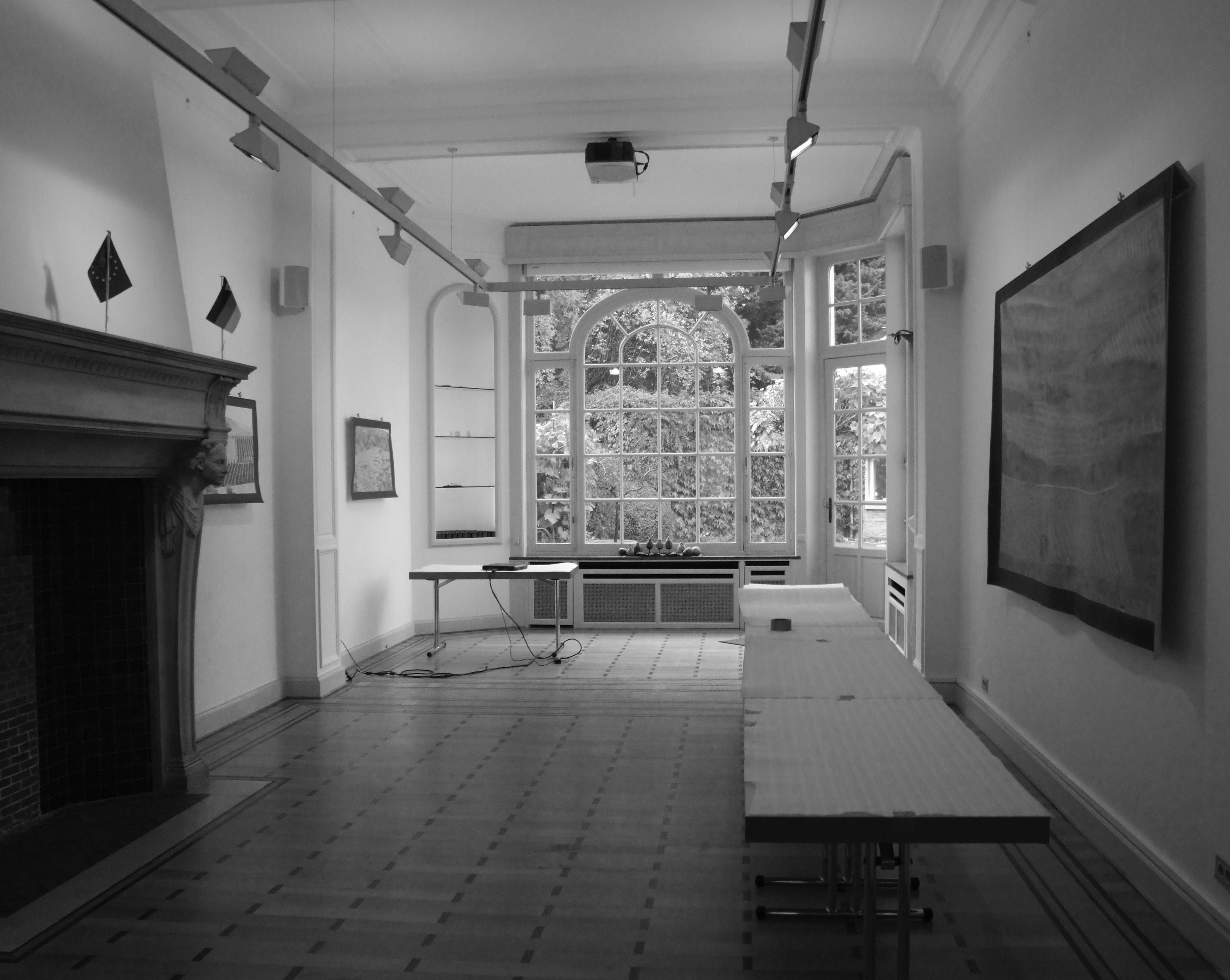


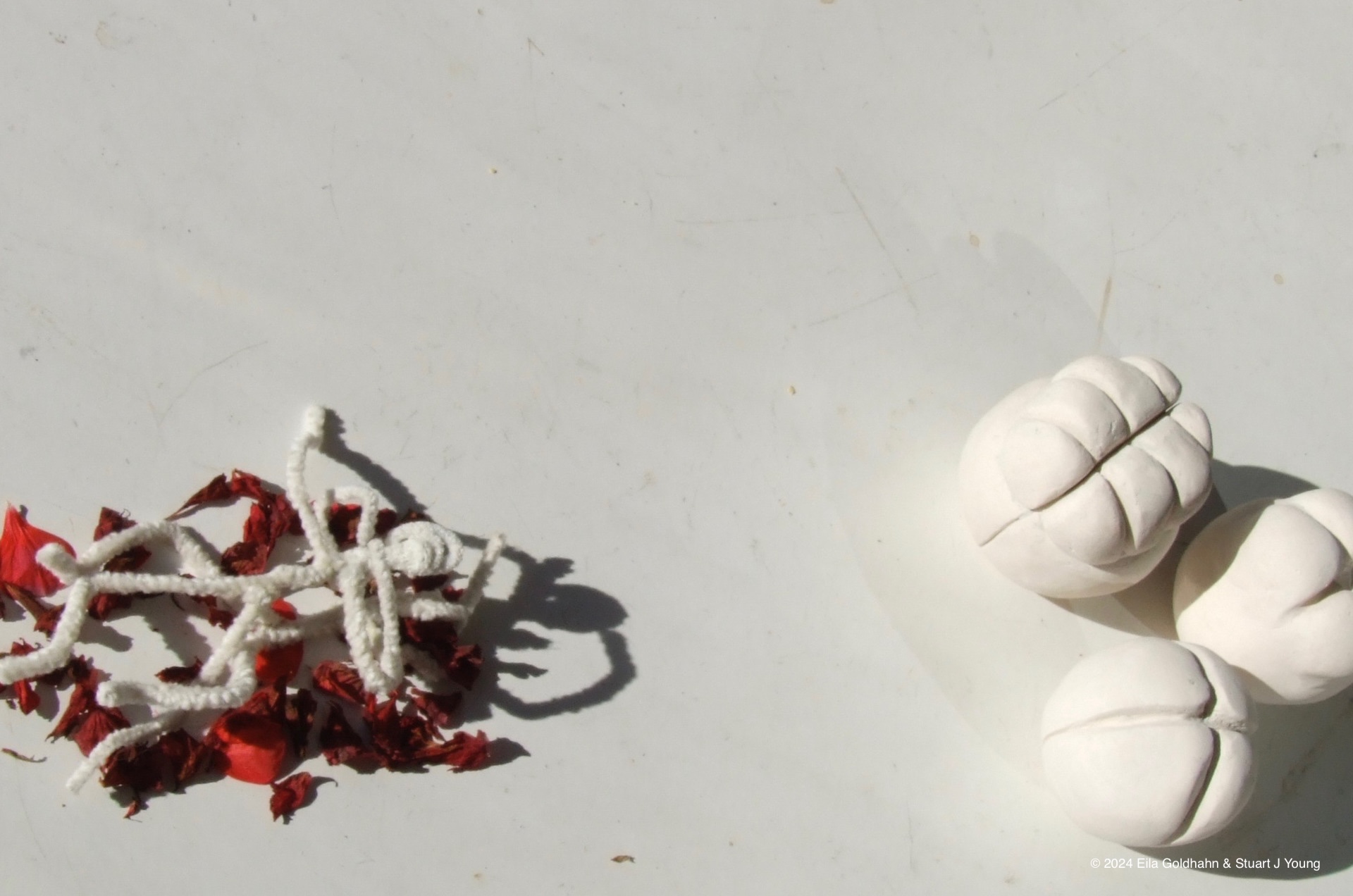


Conceived for the German Embassy Rineland-Palatinate in Brussels, Hortus Conclusus takes its title from the medieval “enclosed garden”, a motif in art and literature associated with fertility, purity, and both earthly and divine love. The installation reimagines this symbolic landscape as a space of encounter and conception, examining the interconnected themes of human affection, spiritual longing, and regeneration. By revisiting the imagery of the enclosed garden, the work creates a setting that is at once intimate and universal, inviting visitors to consider the garden as a metaphor for protection, transformation, and the possibility of renewal.
Artist: Eila Goldhahn
Practice: Art-Science-Ecology-Embodiment
Project type: Installation / Exhibition
Material: china clay, flower petals, mixed media on canvas, textile, wire
Funders: Embassy of Rhineland Palatinate in Brussels, European Union
Artist: Eila Goldhahn
Practice: Art-Science-Ecology-Embodiment
Project type: Installation / Exhibition
Material: china clay, flower petals, mixed media on canvas, textile, wire
Funders: Embassy of Rhineland Palatinate in Brussels, European Union