S T U A R T
J Y O U N G
Sculptures of Body and Landscape
Artist: Stuart J Young
Practice: Sculpture
Project type: Research project / Exhibition
Medium: Ciment Fondue, Plaster, Pigment, Wood
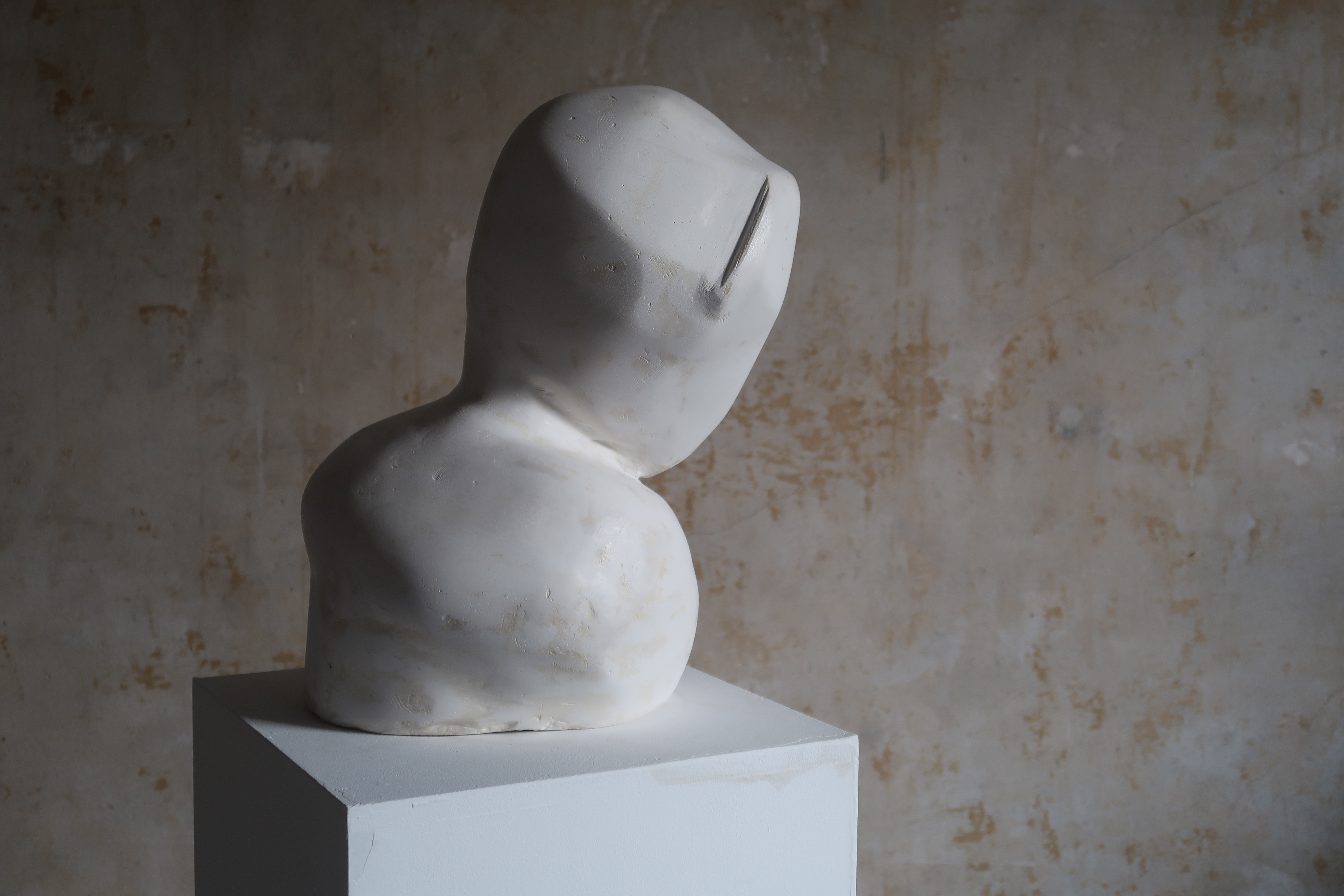
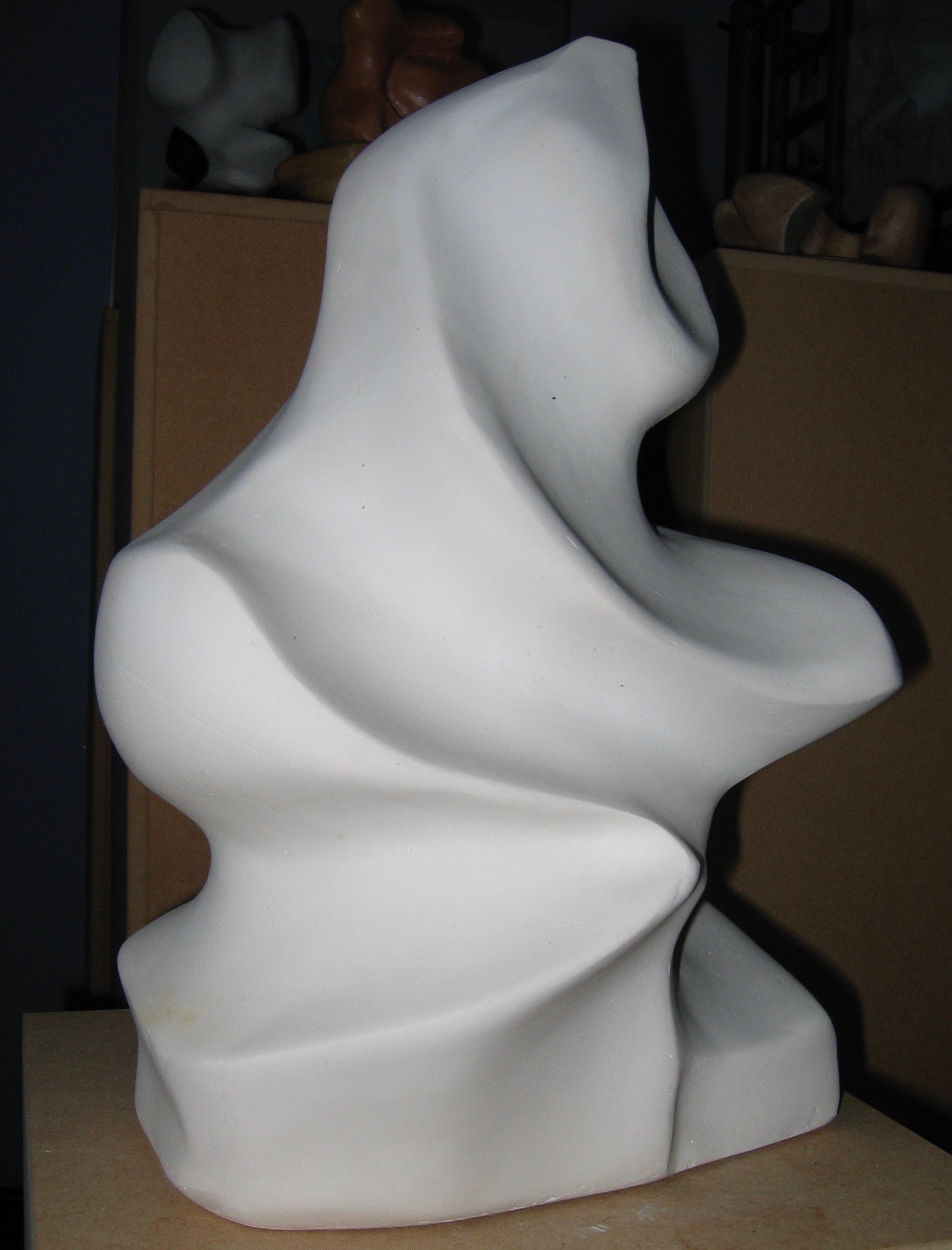
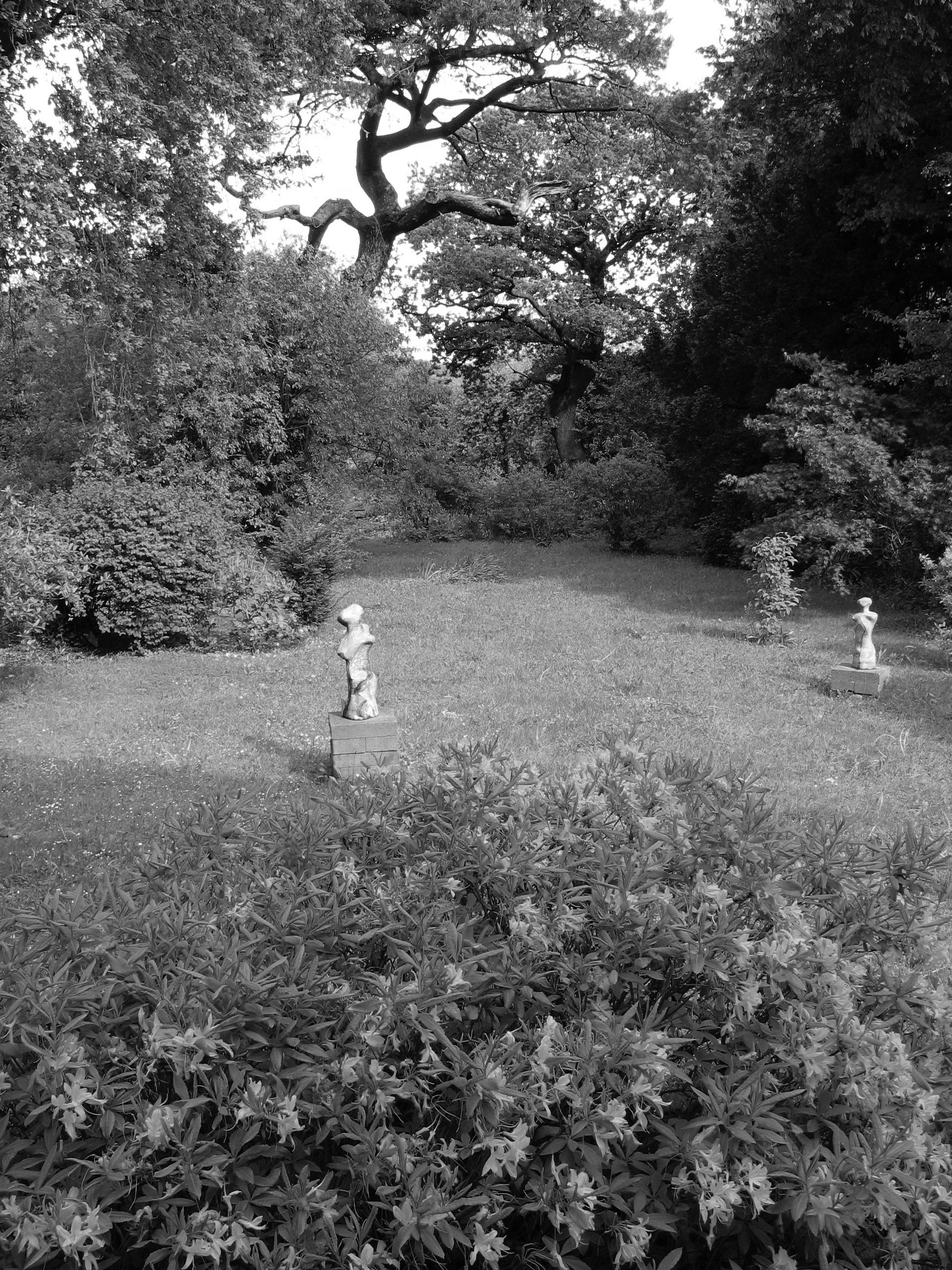
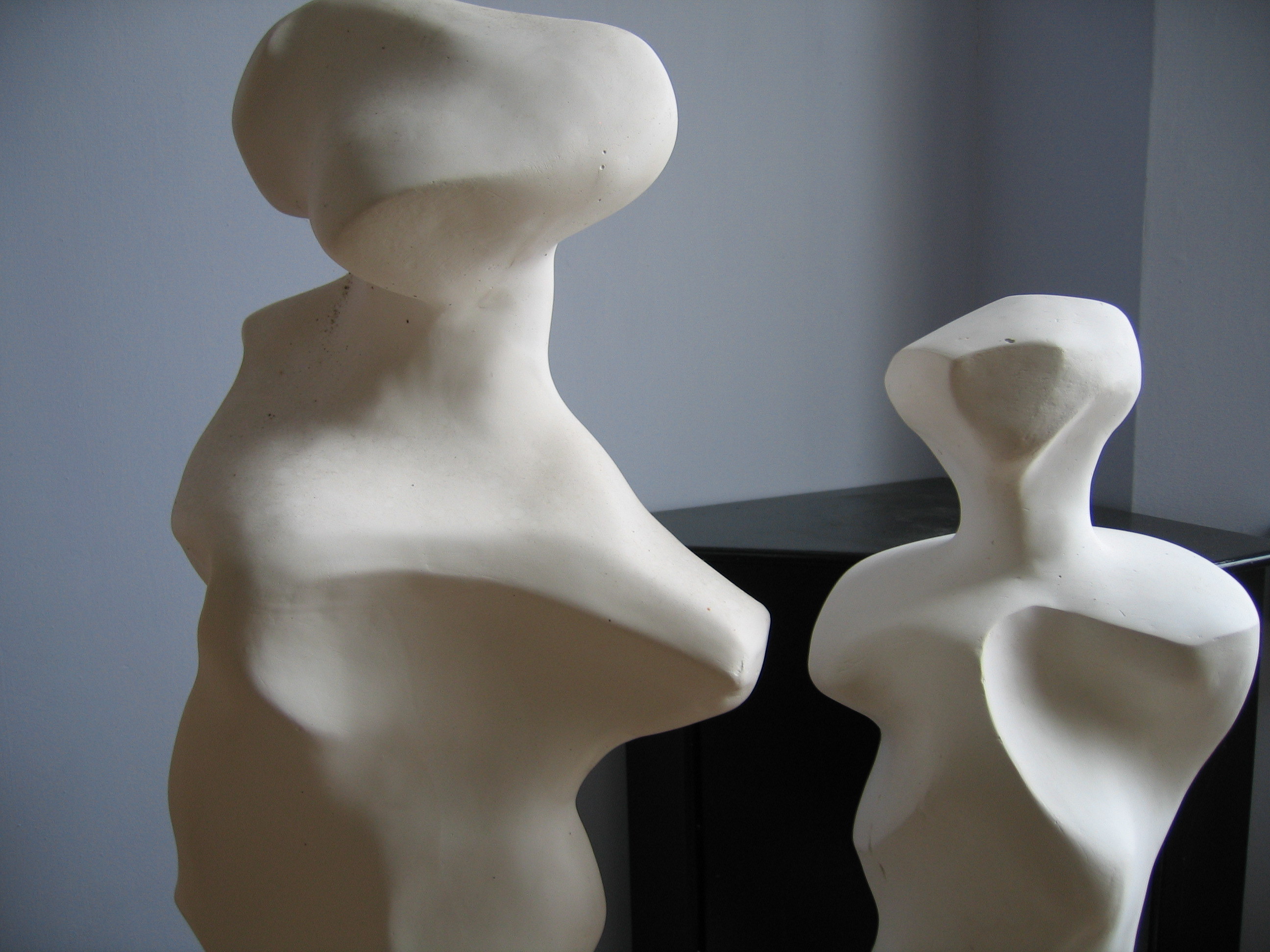
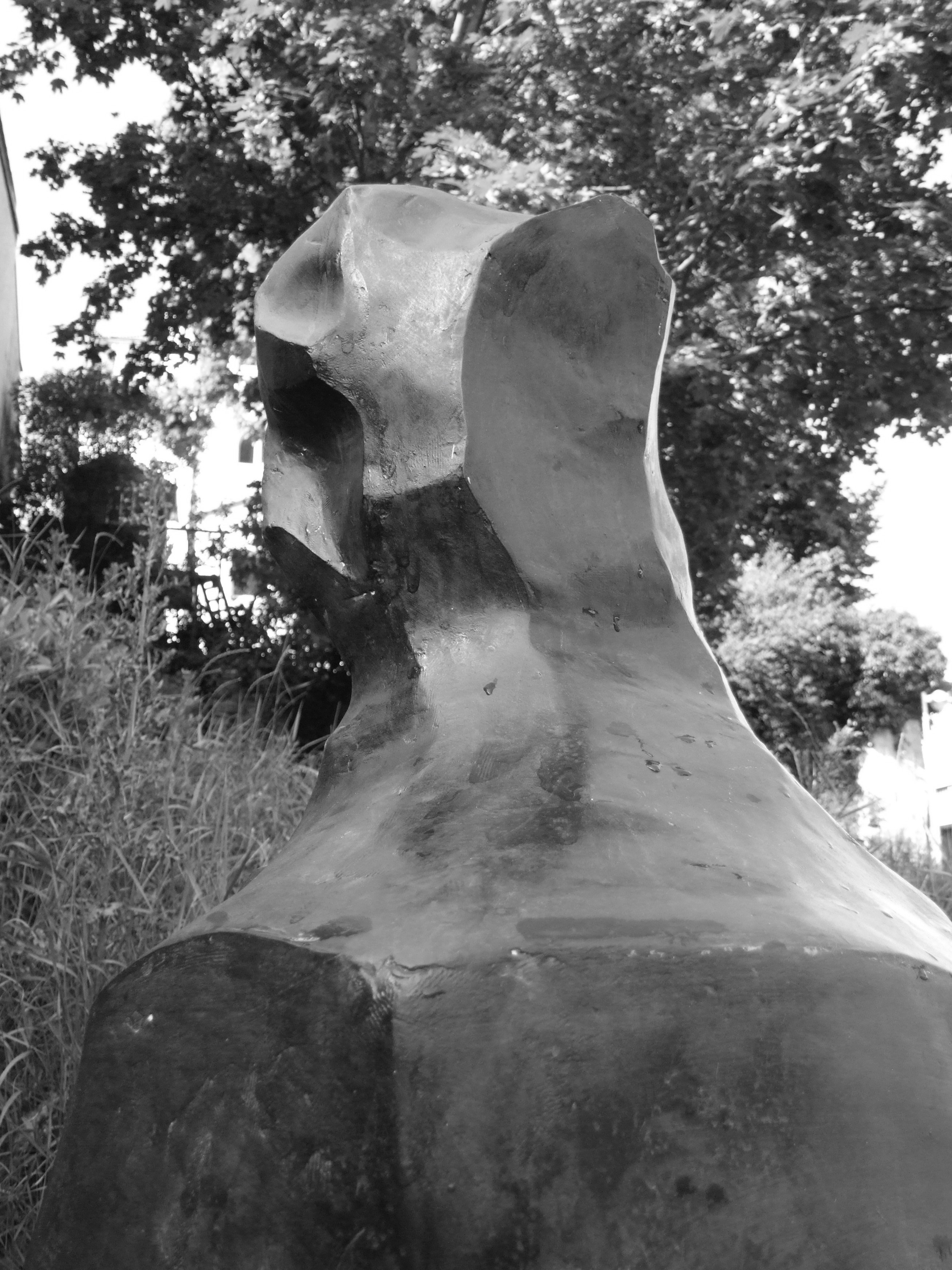
Body and Landscape is a series of sculptural works that explores the relationship between the human form and the natural world. Developed in dialogue with the ideals of classical modernism, the works draw inspiration from sculptors such as Jean Arp and Henry Moore, whose organic forms dissolve the boundaries between body, landscape, and abstraction.
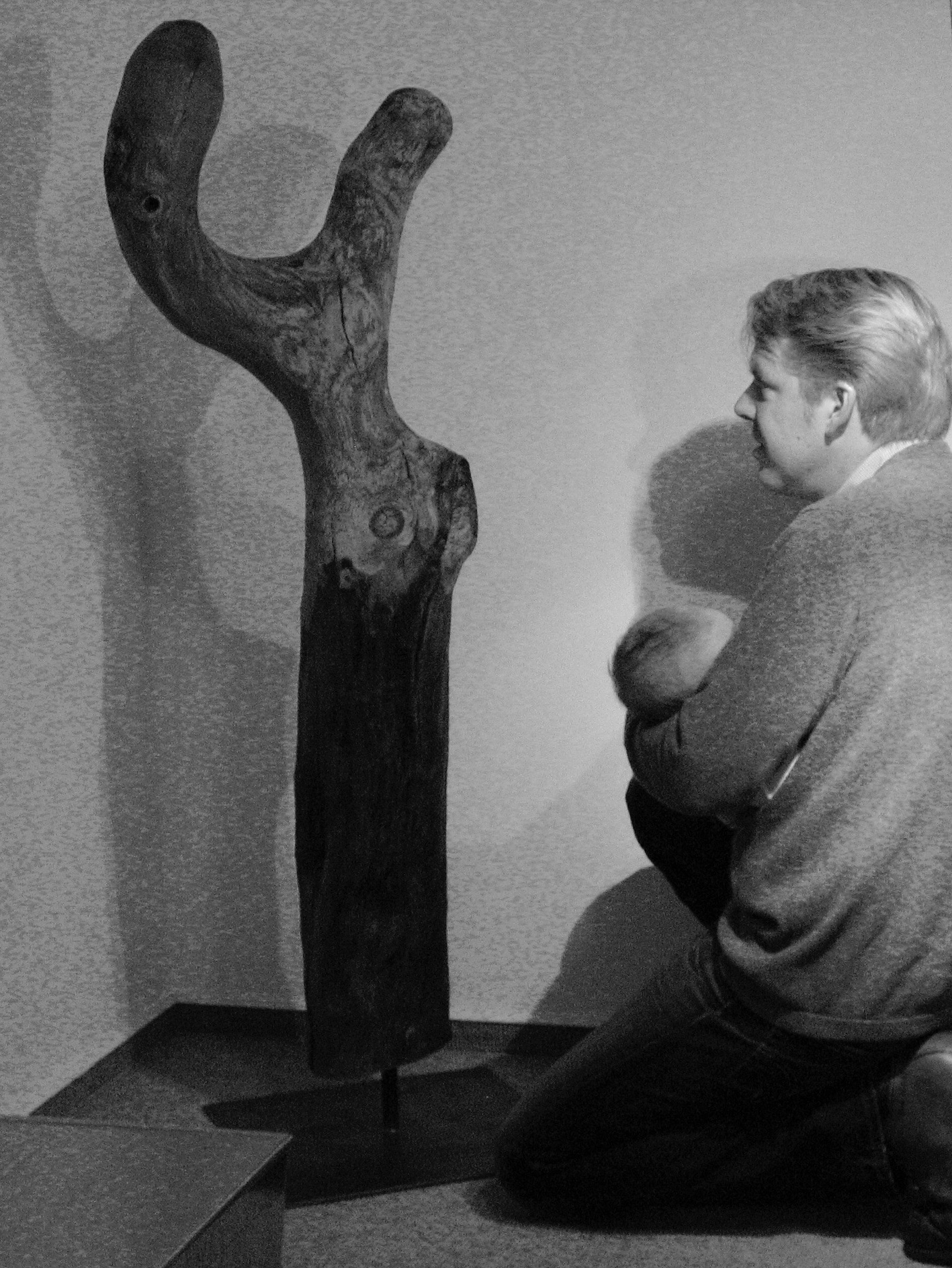
The sculptures emerge through an intuitive and tactile process. Figures are carved directly from woods such as apple and holly, allowing the grain and character of each material to shape the final form, or are first modelled in plaster before being cast in metal or ciment fondu. Their rounded, often biomorphic forms evoke fragments of bodies, stones, seeds, or geological formations, suggesting a continuity between human anatomy and the rhythms of nature.
Materiality is central to the work. Surfaces are finished with pigments derived from ochres and siennas, polished with beeswax, or painted with milk, employing traditional techniques that emphasise the sculptures' physical presence and their connection to natural processes. Through these elemental materials and methods, Body and Landscape proposes sculpture as an act of transformation in which body and terrain, memory and matter, become inseparable.
Practice: Sculpture
Project type: Research project / Exhibition
Medium: Ciment Fondue, Plaster, Pigment, Wood
Body and Landscape is a series of sculptural works that explores the relationship between the human form and the natural world. Developed in dialogue with the ideals of classical modernism, the works draw inspiration from sculptors such as Jean Arp and Henry Moore, whose organic forms dissolve the boundaries between body, landscape, and abstraction.
The sculptures emerge through an intuitive and tactile process. Figures are carved directly from woods such as apple and holly, allowing the grain and character of each material to shape the final form, or are first modelled in plaster before being cast in metal or ciment fondu. Their rounded, often biomorphic forms evoke fragments of bodies, stones, seeds, or geological formations, suggesting a continuity between human anatomy and the rhythms of nature.
Materiality is central to the work. Surfaces are finished with pigments derived from ochres and siennas, polished with beeswax, or painted with milk, employing traditional techniques that emphasise the sculptures' physical presence and their connection to natural processes. Through these elemental materials and methods, Body and Landscape proposes sculpture as an act of transformation in which body and terrain, memory and matter, become inseparable.